testRigor
Service Overview & Value Proposition
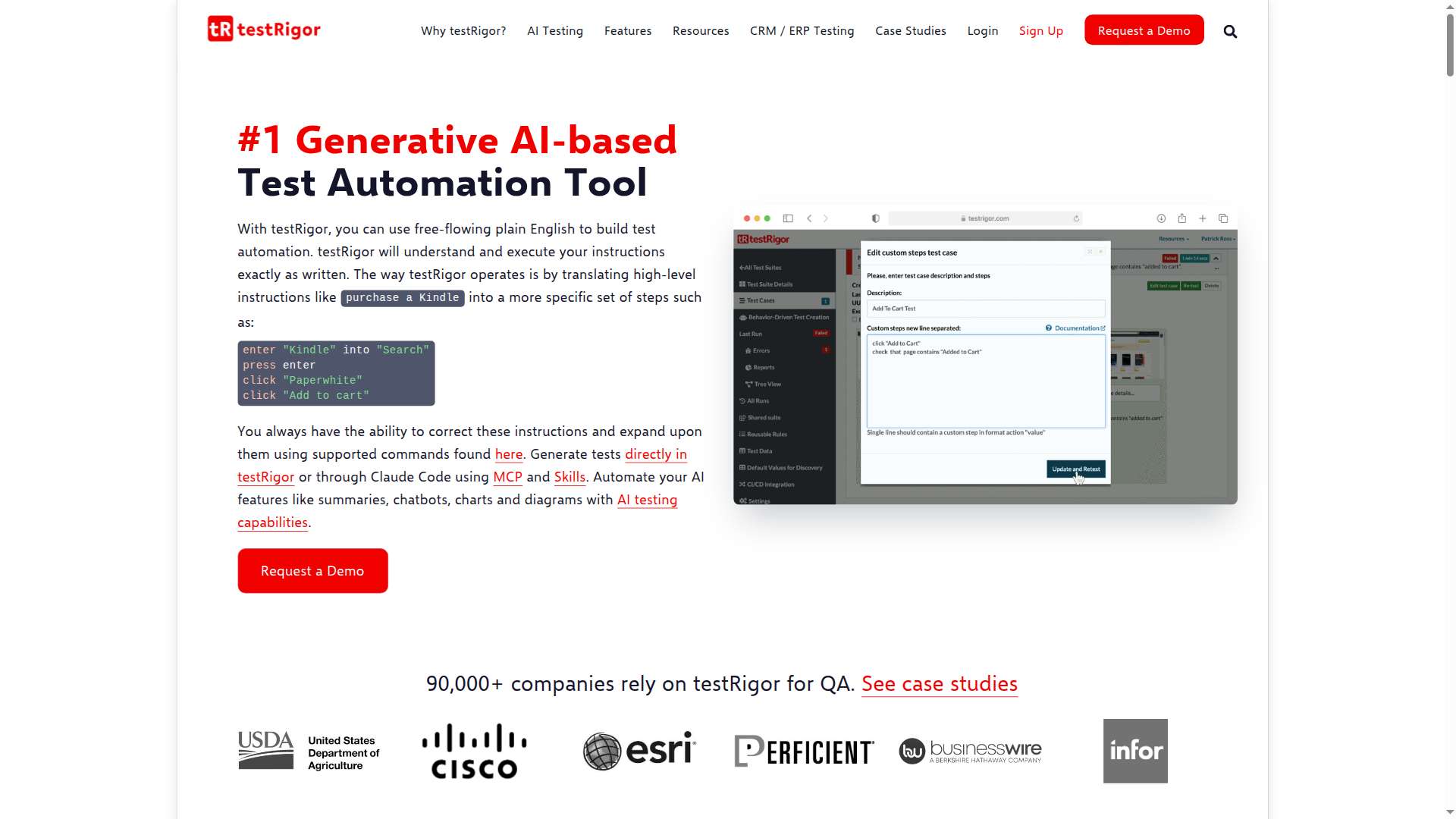
Designed to handle modern software complexity, testRigor provides comprehensive capabilities for testing AI-native applications and LLM-driven features such as chatbots, generated summaries, and visual components. By enabling users to write intuitive commands like searching for products or clicking specific interface elements, the platform bridges the gap between technical and non-technical team members, allowing anyone to easily contribute to the quality assurance process.
Furthermore, testRigor features intelligent, AI-based self-healing mechanisms that automatically adapt to UI changes and application updates, drastically reducing script maintenance overhead and ensuring high reliability across test suites. Seamlessly integrating with continuous integration and continuous deployment (CI/CD) pipelines, testRigor enables organizations to accelerate release cycles, minimize software defects, and achieve unprecedented testing efficiency at scale.
1. 💰 Monetization (24/30): TestRigor provides an estimated 1.4 million dollars in annual business value and revenue creation opportunities by revolutionizing software quality assurance processes through natural language-based test automation. Allowing anyone to write test scenarios without complex coding brings business and customer success teams into the QA process, directly driving down churn rates caused by poor customer satisfaction. However, to maximize revenue, the company must expand beyond simple test verification to develop premium consulting and enterprise security package products based on user behavioral data. Additionally, strategic alliances with global cloud marketplaces and flexible usage-based pricing models should be introduced to lower barriers for new customers. 2. 📉 Cost Reduction (24/30): Enterprises can achieve approximately 1.9 million dollars in annual operating cost reductions by drastically cutting massive labor and outsourcing expenses previously tied to manual testing and script maintenance. The AI-based self-healing mechanism eliminates the inefficient resource waste of manually updating test scripts every time the UI changes, allowing QA engineers to focus on high-value design tasks. However, to sustain these savings, technological refinement is required to optimize initial learning costs so the AI adapts seamlessly to complex enterprise infrastructures. Furthermore, dedicated guides and automated diagnostics should be added to minimize productivity dips during the initial onboarding period. 3. ⚡ 10x Productivity (23/30): Test scenario creation speed is improved by more than 10 times, proving a unique workflow impact where even non-technical staff can build complex end-to-end test cases in minutes using plain English inputs. Unified test verification across web, mobile, desktop, and mainframe environments dramatically shortens cross-department collaboration delays and boosts overall development pipeline efficiency. To achieve even greater 10x innovation, a multi-agent automated validation loop should be introduced to cross-check chat and generative AI model responses in real-time. Continuous performance improvements at the architectural level are also essential to prevent latency during massive parallel test runs and maximize cloud resource allocation efficiency. 4. 🔍 Search & AI Optimization (8/10): The website metadata structure and SEO tags effectively target core keywords in no-code test automation and AI-driven software testing, securing strong visibility. Rich documentation and case studies reflecting the latest trends in generative AI and natural language testing significantly enhance crawling efficiency for search and answer engines. However, to gain a greater edge in conversational search platforms, structured data markup should be strengthened and in-depth FAQ content addressing technical questions frequently asked by developers and QA experts must be expanded. Brand authority metrics should also be continuously elevated through expanded collaborative content across tech blogs and external platforms. 5. 📊 Overall Assessment: TestRigor is a promising solution causing a massive paradigm shift in the traditional software testing market through clear and practical natural language test automation. However, since the no-code test automation space exhibits red ocean characteristics with numerous global competitors, the company must solidify its technological moat as a fully autonomous AI agent beyond simple command translation. Management should not settle for short-term growth, but rather secure market dominance by equipping the platform with on-premise support meeting strict enterprise security requirements and advanced AI model customization features.
💬 Feedback & Reviews (0)