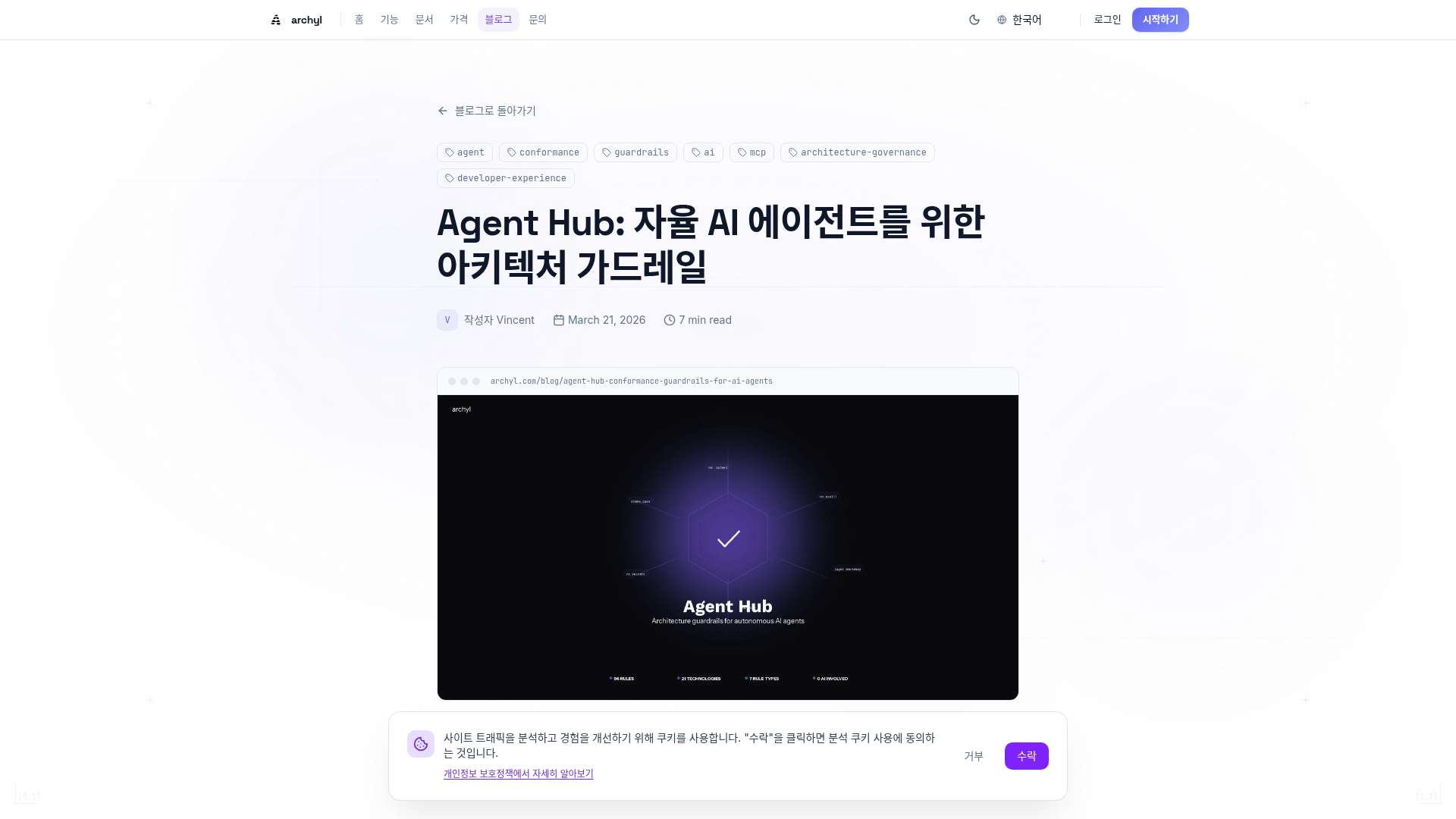
A fundamental shift is taking place in how software is written. Six months ago, an engineer spent two days building a new service. They checked ADRs, asked colleagues which database to use, followed naming conventions learned over months, and pushed code that fit the architecture because they understood it. Today, an AI agent does that work in 20 minutes. The code compiles, and tests pass. However, the agent used MongoDB when the team standardized on PostgreSQL. It scattered fmt.Println calls everywhere instead of structured logging. It bypassed the service layer built over three sprints and executed database queries directly in the HTTP handler. The agent is faster, but it does not know what it does not know.
The true cost of velocity without governance arises from entering an era where code production speed is practically infinite. Tools like Claude Code, Cursor, Copilot Workspace, and Devin can create entire services in minutes. Teams that used to deploy weekly now deploy daily. The bottleneck has shifted from how fast code can be written to how fast architecture entropy can destroy a system. Consider what happens when five AI agents work on the same codebase simultaneously. Agent A adds a new REST endpoint using the Express pattern. Agent B adds another endpoint using the Fiber pattern. Now two framework instances exist in the same service. Agent C creates a payment module that queries the database directly. Agent D creates an order module that goes through the repository layer. Now two data access patterns exist. Agent E adopts a library deprecated in the tech radar six months ago. It works perfectly, but it is also a ticking time bomb. None of these are bugs, and all pass CI. Therefore, architectural checks must also enter CI.

Amidst this structural disorder, Agent Hub emerges as an innovative architecture guardrail solution designed to control the surging architecture entropy and technical debt in the era of autonomous AI agents. Agent Hub systematically blocks architectural violations occurring in autonomous AI coding environments, preventing direct system downtime costs and providing a foundation for new revenue protection and additional monetization worth 4.5 million dollars annually through a long-term enterprise license model. By precisely targeting the structural disorder enterprises experience due to the accelerated adoption of high-performance coding tools like Claude Code or Cursor, it captures high subscription value from large software development organizations. Going beyond simple coding standard validation to extend guardrails into business logic optimization, it builds a plugin ecosystem capable of dynamically accommodating special custom governance requirements of enterprise customers, establishing a complete structure for revenue diversification.
In terms of cost reduction, this solution exhibits unmatched value. It drastically reduces the repetitive effort of senior engineers previously spent on manual code reviews and refactoring caused by architectural violations, achieving massive labor and operational cost savings of 3.2 million dollars annually. Since quality management costs drop dramatically by fundamentally and automatically blocking bottlenecks at the CI pipeline stage where humans would otherwise manually inspect countless codes generated by AI agents, operational efficiency is maximized. The automated onboarding process minimizes consulting and engineering resources incurred during initial tech stack definition and custom rule setting, while strengthening machine learning-based rule optimization feedback loops to reduce manual exception handling costs for developers.

Productivity 10x innovation stands as the most powerful weapon of this solution. It completely resolves the discrepancy between code generation speed and system stability in development organizations, improving work efficiency in multi-agent environments by over 90 percent and shortening rework time caused by architectural drift. By proactively preventing agents from indiscriminately adopting different frameworks or deprecated libraries, consistency is maintained without slowing down the entire software lifecycle. It possesses technical flexibility to synchronize guardrail rules in real-time according to the rapid update cycles of various AI coding assistants, and maximizes productivity by providing prompt-level inline guide features that suggest correct conventions in real-time as AI agents generate code rather than merely providing unidirectional blocks.
Regarding search and AI exposure, core keywords such as architecture guardrails, code governance, and AI agents are organically placed across the title, meta tags, and body text, showing high exposure suitability in development-related search engines and AI answer engines. Technical white papers and migration case study content are continuously reinforced to be clearly recognized as a development productivity tool in LLM-based search environments, and contextual expansion using specific error scenarios and solutions actually searched by developers ensures accurate targeting without misrecognition.
Overall, Agent Hub is a highly original and timely solution that accurately identifies the most realistic and fatal architecture collapse problem faced by enterprises amid the flood of AI coding tools. It possesses strong potential to establish itself as essential governance infrastructure in the autonomous agent ecosystem beyond a mere red-ocean code analysis tool, securing interoperability with global open-source standards and universal adapters that instantly integrate with various LLM agent frameworks. Management must define this solution not merely as a development assistance tool, but as a core risk management asset in the AI transformation era, actively promoting its adoption and expansion.

To systematically manage codebases that grow more complex as AI-written code increases and to maximize long-term maintainability, review the detailed features and adoption guide of this innovative solution by visiting
https://www.archyl.com/ko/blog/agent-hub-conformance-guardrails-for-ai-agents to experience it firsthand.